
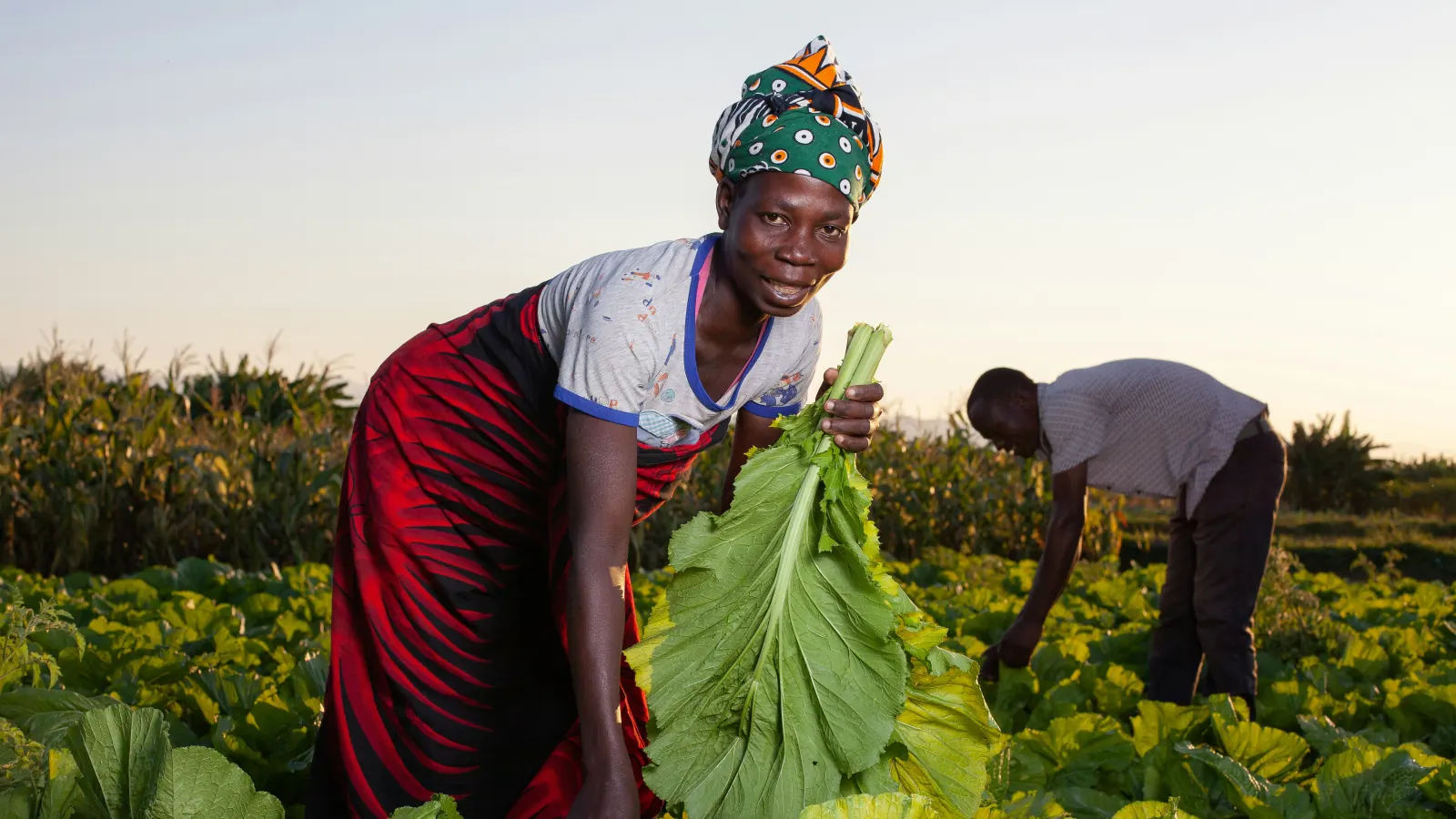
Farm worker minimum wage in South Africa, 2026
Photo: Richard Nyoni · Unsplash
From 1 March 2026 a farm worker is entitled to at least R30.23 for every ordinary hour worked, the same as the national minimum wage. That is R272.07 for a 9-hour day and R1 360.35 for a 45-hour week. Sectoral Determination 13 still sets farm workers’ other conditions: working hours, overtime, Sundays, public holidays, leave and what may be deducted for food and housing.
The minimum wage from 1 March 2026
The Minister of Employment and Labour sets the national minimum wage each year by notice. Government Notice R.7083 (Government Gazette 54075) sets it at R30.23 an hour from 1 March 2026 and says farm workers are entitled to the same R30.23 an hour (Schedule 1, item 2(a)).
| Period | Minimum | How |
|---|---|---|
| An hour | R30.23 | The gazetted rate |
| A 9-hour day | R272.07 | 9 × R30.23 |
| A 45-hour week | R1 360.35 | 45 × R30.23 |
| A month | R5 894.85 | The weekly amount × 4⅓, the conversion in BCEA section 35(3) |
- The minimum is tested on the pay for ordinary hours. Overtime premiums, allowances for transport, tools, food or housing, payment in kind and bonuses do not count towards it (National Minimum Wage Act section 5).
- A worker paid by the piece or the task may not earn less than the minimum for the ordinary hours worked (section 5(3)).
- The previous rate was R28.79 an hour. The rate is reviewed every year, usually with effect from 1 March.
Working hours and overtime
Sectoral Determination 13 for the farm worker sector (Government Notice R.149, 2006) sets the hours and overtime for farm workers:
- Ordinary hours: no more than 45 a week, and no more than 9 a day for someone who works 5 days a week or fewer, or 8 a day for someone who works more than 5 days (clause 11). A worker under 18 may work no more than 35 hours a week.
- Overtime only by agreement, no more than 15 hours a week, and no more than 12 hours’ work in a day including overtime (clause 13).
- Overtime pay at least one and a half times the wage, or by agreement the ordinary wage plus 30 minutes’ paid time off for each hour, or 90 minutes’ paid time off for each hour (clause 14).
- More hours in season: by written agreement, ordinary hours may be increased by up to 5 a week for up to 4 months in any 12, to no more than 10 hours a day, if they are reduced by the same amount for the same period in that year; the worker is paid the normal wage throughout (clause 12).
- Night work (after 20:00 and before 04:00) only by agreement, with an allowance of at least 10% of the ordinary daily wage, and transport between home and work at the start and end of the shift (clause 17).
Sundays and public holidays
| Hours worked on the Sunday | Pay |
|---|---|
| One hour or less | Double the wage for one hour |
| More than 1, up to 2 hours | Double the wage for the time worked |
| More than 2, up to 5 hours | The ordinary daily wage |
| More than 5 hours | The greater of double the pay for the time worked, or double the daily wage |
A worker who does not live on the farm is counted as having worked at least 2 hours on a Sunday they work. Work on a public holiday needs an agreement, and is paid at least double the daily wage, or the normal day’s wage plus the pay for the time worked if that is more (clause 20).
Deductions for food and housing, and leave
- Food and housing: up to 10% of the wage for each, and only if the employer supplies it at its own cost, regularly, as a condition of employment; nothing else is deducted for it (and nothing for electricity or water with housing); and the deduction is no more than what it costs the employer (clause 8).
- The house must have a durable, waterproof roof; glass windows that open; electricity inside where the farm has it; safe water inside or within 100 metres; a flush toilet or pit latrine in or near the house; and at least 30 square metres. No housing deduction for a worker under 18, and only one worker per house may be charged. Where more than two workers share communal accommodation, the total deducted from all of them is at most 25% of one worker’s minimum wage, shared equally.
- Loans: repayments of no more than one tenth of the wage, and no deduction for grazing a worker’s own animals.
- Annual leave: three weeks on full pay a year, or by agreement one day for every 17 days worked or one hour for every 17 hours (clause 21).
These clauses are quoted from Sectoral Determination 13 as published in 2006. Every amendment published since (2009, 2012, 2013 and 2016) changed only its minimum wage clauses, which the national minimum wage has now replaced; the conditions above are unchanged. Where Sectoral Determination 13 says nothing, the Basic Conditions of Employment Act applies.
Wages and payslips in Veldwys
Veldwys keeps a wage book for workers paid by the hour, the day or the piece, with a daily roll call for a whole team, a weekly attendance grid, leave, sick days, overtime, and piecework topped up to the farm’s own minimum wage. Pay runs deduct UIF and advances and can be exported. Payslips carry what a farm worker’s payslip has to show: the employer and address, occupation, rates, hours by kind including Sundays and public holidays, earnings by kind, each deduction, the UIF number and net pay. Workers can check in at printed codes in the Veldwys Worker app, in eleven languages.
Questions
What is the minimum wage for farm workers in 2026?
R30.23 for every ordinary hour worked, from 1 March 2026: the same as the national minimum wage (Government Notice R.7083, Schedule 1 item 2(a)).
What is the farm worker minimum wage per month?
For a 45-hour week, R1 360.35 a week, which is R5 894.85 a month using the BCEA’s conversion of 4⅓ weeks to a month.
May a farmer deduct for housing?
Yes, up to 10% of the wage, but only for housing that meets the standards in Sectoral Determination 13, and never for a worker under 18.
Is Sunday work double pay for farm workers?
Up to 2 hours is paid at double the wage (for at least one hour). From 2 to 5 hours it is the ordinary daily wage, and for more than 5 hours the greater of double the pay for the time worked or double the daily wage.
Sources
Read for this guide. Where a figure changes by notice each year, the guide gives the date it applies from.
- National minimum wage from 1 March 2026: GN R.7083, Government Gazette 54075
- Sectoral Determination 13: Farm Worker Sector (GN R.149, Government Gazette 28518, 2006)
- Sectoral Determination 13 amendment, 2009 (GN R.141, Government Gazette 31888): minimum wages
- Sectoral Determination 13 amendment, 2012 (GN 29, Government Gazette 34946): minimum wages
- Sectoral Determination 13 amendment, 2013 (GN 65, Government Gazette 36115): minimum wages
- Sectoral Determination 13 amendment, 2016 (GN 137, Government Gazette 39648): minimum wages
- Basic Conditions of Employment Act 75 of 1997, consolidated text (LawLibrary)